Play FreeCell Online Free
In FreeCell every card is face up from the start, so you never have to guess and you rarely lose to bad luck. Of the original 32,000 Microsoft deals, only one has no solution. The game here is free, with no download and no signup, and it uses Microsoft's deal numbers: game #617 on this page is the same game #617 a friend remembers from Windows. Hints and undo have no limit.
How to play FreeCell
The deal puts the cards in eight columns, seven cards in each of the first four and six in the rest. Above them are four free cells on the left and four foundations on the right. You win when every card is on a foundation, each suit built from Ace to King.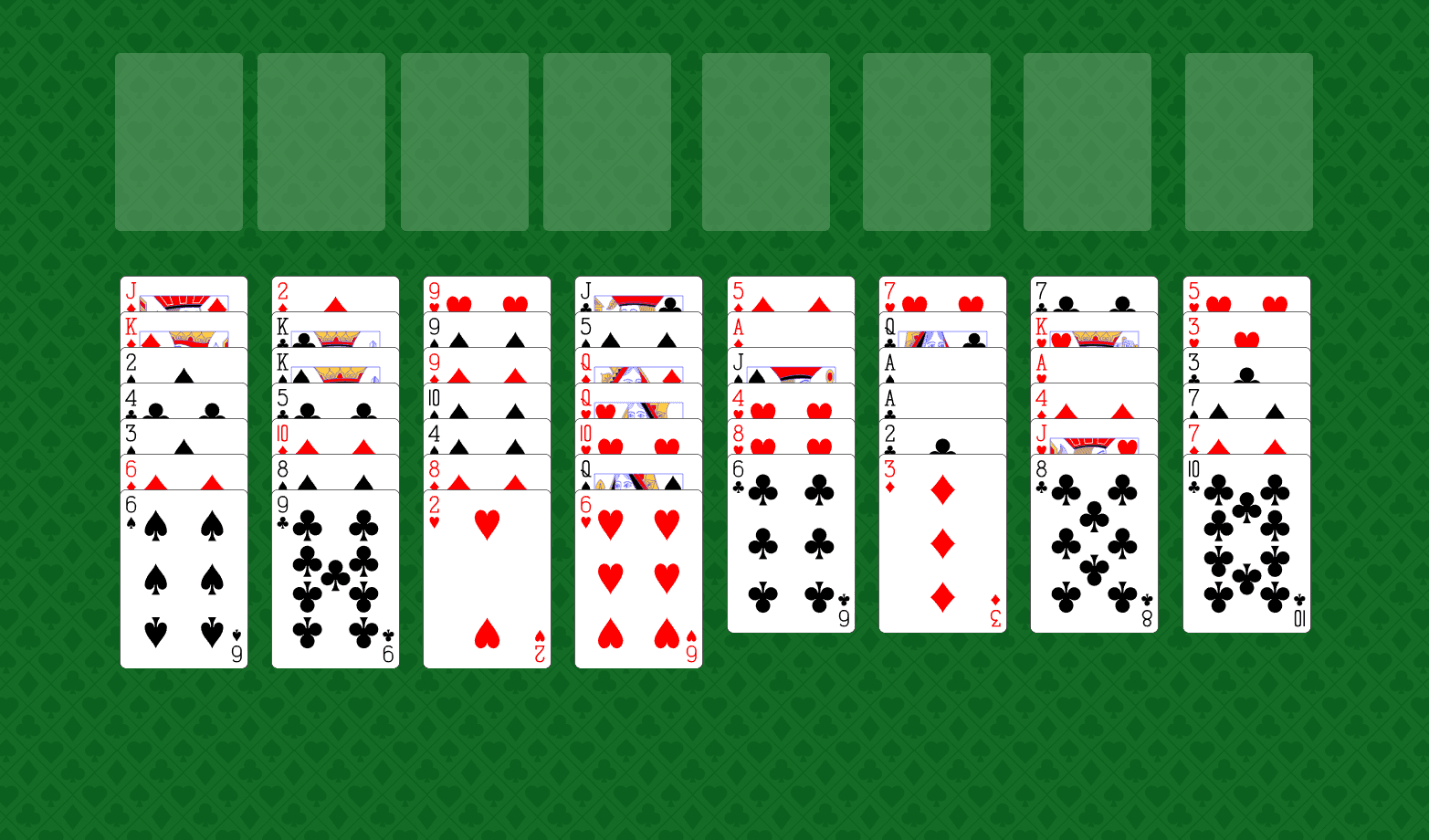
- Columns: build down in alternating colours, so a red 9 goes on a black 10. Any card can go into an empty column.
- Free cells: each holds one card. Park something there to get at the card under it, and bring it back down when there is a place for it.
- Foundations: Ace first, then the 2, 3 and so on in the same suit. Double-click a card to send it up.
- Moving several cards: you can drag a sequence only when there is room to move it one card at a time. The limit is (empty cells + 1) × 2empty columns. The game works this out for you and refuses a move that breaks it.
FreeCell strategy that actually wins
Look for the aces and twos first and work out which columns are sitting on them. Those columns are where the game starts. Be stingy with the free cells. Each occupied cell cuts the number of cards you can move at once, and an empty column doubles it, so an empty column is worth more than an empty cell. Don't send a card to the foundation just because you can; a low card still in play may be the only place to hang a sequence. Before a long chain of moves, count it through to the end. If it goes wrong, undo as far back as you need, the deal stays the same. If you are stuck, Hint outlines a card and draws an arrow to where it can go.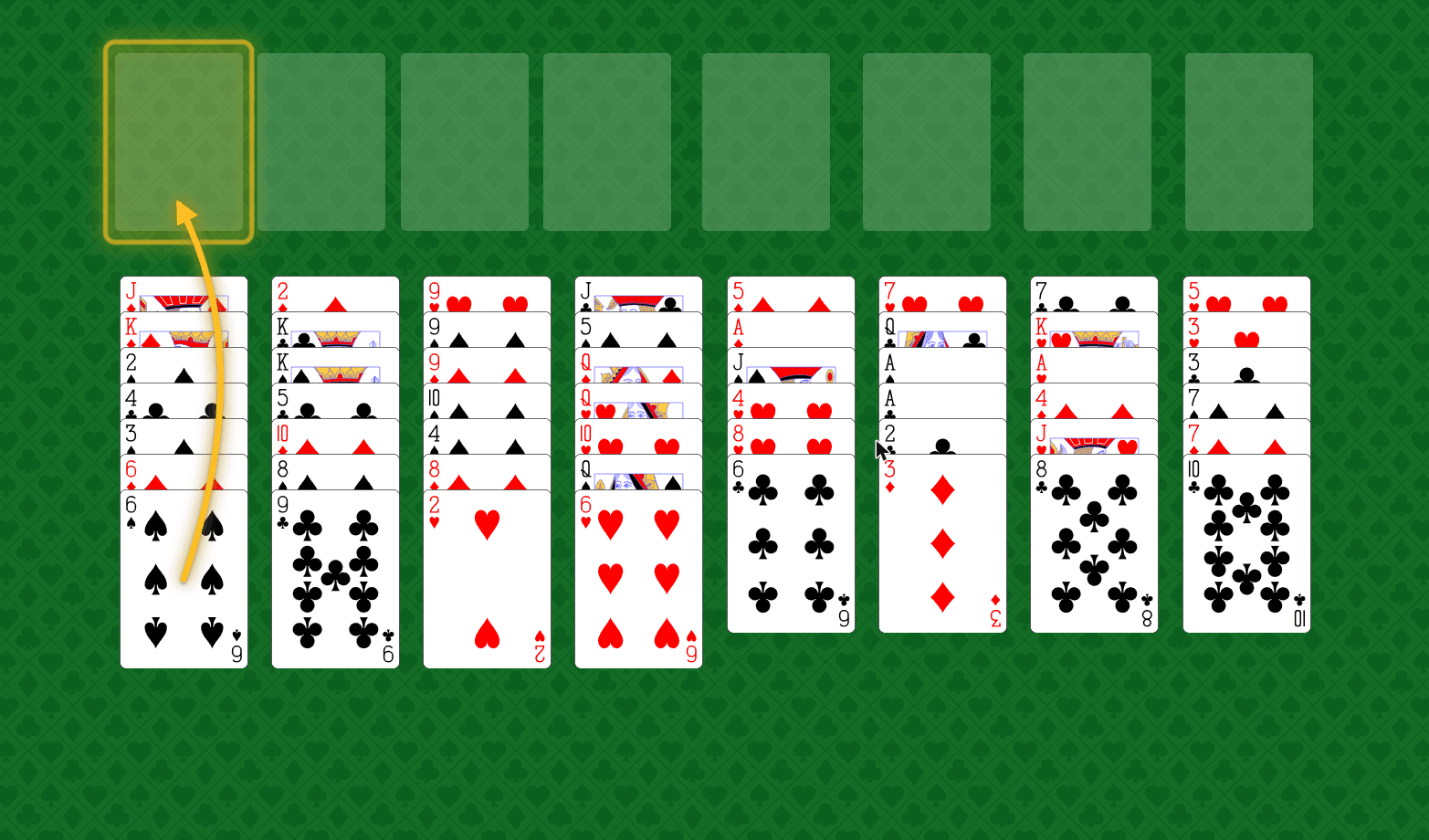
Where FreeCell comes from
Paul Alfille wrote the first computer FreeCell in 1978 on the PLATO system at the University of Illinois. Jim Horne's version for Microsoft arrived in 1991 and shipped with Windows 95, which is how most people learned the game. The 32,000 numbered deals turned into a group project: in 1994 the Internet FreeCell Project recruited volunteers to solve every one of them, and they did, except for game #11982. Our deals use the same numbering, so you can try that one yourself.
Features
- Microsoft-compatible deals: game #1 to #1,000,000, the same cards as the original.
- Shareable games: every game has a link. Send it and your friend gets the identical deal.
- Hints and undo: Hint shows a legal move, and undo and redo have no limit.
- No download, no signup, no ads: open the page and play, on desktop or phone.
If you would rather play the classic, Klondike Solitaire is one click away, and the daily deal gives everyone the same game each day.